When selecting a thermostat, you may encounter terms such as thermostat temperature differential or hysteresis. This specification describes the temperature range between when a thermostat activates and deactivates connected equipment. Therefore, understanding how it works can help you select the appropriate control for a heating, cooling, or ventilation application.
Looking for a line voltage thermostat with a defined switching range? View K-Kontrol line voltage thermostats for available temperature ranges & configurations.

What Is Thermostat Temperature Differential?
Temperature differential, also called hysteresis, is the difference between the temperature at which a thermostat’s contacts close and the temperature at which they open. In other words, it establishes how much the temperature must change before the thermostat switches the connected equipment.
For example, consider a thermostat controlling a ventilation fan. If the thermostat turns the fan on at 70°F and off at 65°F, the difference between the two switching points is 5°F.
This range prevents the thermostat from switching the fan on and off in response to every small temperature change. As a result, hysteresis directly affects how the thermostat cycles connected equipment.
How Hysteresis Affects Equipment Cycling
A thermostat responds to temperature changes at its sensing location. However, the equipment does not need to switch every time the temperature changes by a fraction of a degree. Instead, hysteresis creates separation between the on and off points.
A smaller range keeps these switching temperatures closer together. Consequently, connected equipment may cycle more frequently as conditions change.
A larger range creates more separation between the switching points. Therefore, the temperature can change by a greater amount before the thermostat switches the equipment again.
The appropriate range depends on the equipment, application & required temperature conditions.
Why the Switching Range Matters
Understanding the switching range helps determine how a thermostat will control connected heating, cooling, or ventilation equipment.
A smaller range can provide tighter temperature control. However, depending on the application, it can also result in more frequent equipment cycling.
In comparison, a larger range allows greater temperature change between switching points. This may reduce cycling frequency, but it also creates a broader operating range.
When selecting a thermostat, consider how much temperature variation the application allows as well as how the connected equipment should cycle.
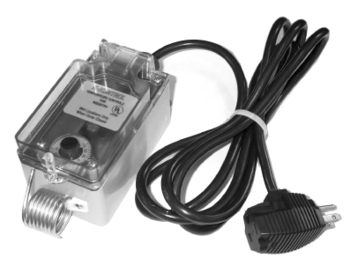
K-Kontrol Line Voltage Thermostats
K-Kontrol line voltage thermostats have a fixed 2°F differential. This provides predictable switching behavior when controlling compatible heating, cooling & ventilation equipment.
Because the 2°F range is fixed, users do not need to adjust a separate hysteresis setting during installation. Instead, the thermostat operates according to its specified switching range and selected temperature setting.
This configuration can be used in applications that require a relatively narrow range between the thermostat’s on and off points.
Hysteresis vs. Temperature Set Point
Although these specifications work together, they describe different aspects of thermostat operation.
The set point establishes the selected operating temperature. Hysteresis determines the separation between the thermostat’s switching points.
For example, changing the thermostat setting changes the target operating temperature. Meanwhile, the switching range determines how much the temperature changes during the control cycle.
Understanding this distinction makes it easier to evaluate how a thermostat will respond in a specific application.
Custom Temperature Control Requirements
Standard thermostat specifications may not fit every application. Some equipment or processes may require different switching behavior based on operating conditions or system requirements.
K-Kontrol offers customization options for applications with specific temperature-control requirements. In addition, other thermostat specifications may be customized when an application requires a configuration outside standard product options.
When evaluating a custom control, provide information about the required operating temperatures, connected equipment & desired switching behavior. These details help determine the appropriate thermostat configuration.
Selecting the Right Thermostat
The correct thermostat temperature differential depends on the amount of temperature variation the application can accept and how frequently the connected equipment should cycle. A narrow range keeps the switching points closer together, while a wider range allows more temperature change between cycles.
K-Kontrol line voltage thermostats use a fixed 2°F range, while custom options are available for applications with different requirements.
Need help selecting a thermostat for your application? Contact us to discuss your temperature-control requirements. We provide direct customer service & technical support.


